Tuesday, April 19, 2016

Tailoring memories in social media

DSC00611 (867x1300)Facebook is worried that its more than one billion daily users are sharing less with one another, headlined the Guardian on Tuesday. People are friending less and posting less: insiders attribute it to ‘context collapse’.

I stopped visiting Facebook a couple of months ago.  The site was, for me, a social bulletin board for our college class ten years ago, then expanded to connect me with friends around the world and to reunite me with people from high school and college.  The site evolved to support conversations and photo exchanges, I liked the the immediacy and ease of messaging, and the Pages where I could share my interests and follow those of others.

But, with time, tweaks to the algorithm to order by ‘similarity to previous likes’ and over-targeted advertising made my feed less interesting and relevant.  Messenger chatbots and tip jars are on the horizon.  Some people filled their streams with sadness and anger, others weaponized unfriending: A swamp of petty cruelties.

I managed my circle down to a ‘Scobel’s Number’ of people that I knew and liked personally, eliminated all business contacts, and demoted the downers in my feed.  But, finally, the whole experience was becoming sad and manipulative on every level.  People filtered their streams, tailoring selective and distorted feeds at particular friends.  Political campaigns and businesses mined feeds to spam sympathetic prospects.   ‘Likes’ drew rebukes, comments fed misunderstandings, silence became a judgement. 

I finally said ‘’enough’ and stopped, DSC00616 (1300x867)deleting the messenger apps and notifications.  People who want to get in touch will know how: coffee, email, phone, blog, Instagram.  ‘happier back in real life with real people, I know who my Friends are and share experiences,  stories,  laughter, and opinions with them.

I had to look up Context Collapse to see whether the engineers and psychologists at Facebook had similar understanding.  It was something else entirely:

In face-to-face communication events we carefully assess the context of the interaction in order to decide how we will act, what we will say, and how we might try to construct and present ourselves. We continuously and often unconsciously take note of the physical surroundings, the people present, and overall tone and temper. We also evaluate our own self and how we fit into the situation, constantly negotiating the image we portray of ourselves.

In contrast, everyone you love, everyone you know, everyone you have ever heard of, everyone who has or will have access to the internet is on the other side of what you say on Facebook.  Your images, actions, and words can be transported to anywhere on the planet and preserved for all time. The eyes of the world and the future are your audience.

What can you say?

File:SNSPrivacy.pngThe problem is not the lack of context, but the collapse of all possible context onto each post.  How will this be perceived, not just by the person that you comment to, but by everyone and their ‘friends of friends’ who might read it?  What does your profile and likes affect the perceptions of your varied social and business contacts.  Who may scroll back through your history to question past events that have no immediacy years later?

‘We only remember the good things’, my mother would acknowledge.  Time and distance dim the hard times; we preferentially recall the best moments and people that really define us.  Perhaps Facebook should implement a similar function that exponentially de-emphasizes events and people that are both more distant and less referred to.

Exactly the opposite of their new “On This Day” feature.

Labels:

Friday, April 1, 2016

Building a better ‘Tay’

microsoft-tay.jpg (600×450)

Conversation will be our new User Interface. – Satya Nadella

My day is filled with goal-directed tasks.  They range from simple (scheduling, search) to complex (negotiation, persuasion).  The more complex the task, the more likely it is to involve a dialog, passing messages to exchange information, to signal agreement, to assign actions.

True Conversational dialogues are held between people, composed of exchanges involving language, non-verbal cues, emotional nuances, and storytelling asides.  When I turn to the computer, it is usually for simple tasks (search, compose, compute, connect) that are command/respond interactions.  I can’t imagine how those could be made easier by making them conversational.

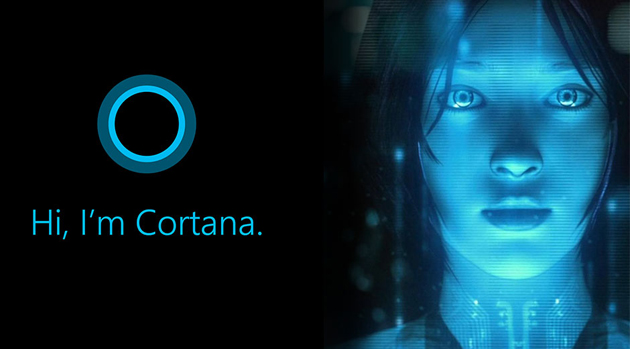
Microsoft envisions creating conversational apps with three levels of capability to support three different kinds of user tasks.  Mediating people-to-people conversations invokes assistance in checking spelling, making connections, and translating languages.  A step up finds Digital Assistants that know your context, and are able to take on tasks like scheduling appointments, planning travel, discovering music, and finding nearby places to eat.  ‘bots add technical capabilities for machine learning and natural language understanding, and so are able to inform, advise, and anticipate user’s needs, enhanced versions of Cortana / Siri.  (Somehow, they are always depicted as a bit creepy…and too often as young female servants)

cortanahero+copy.jpg (630×349)

Tay was intended to be one of the latter apps, but failed miserably when released into the wild to learn about people.  Set upon by trolls, the algorithm was taught a set of wild untruths, which it happily used without any contextual understanding or moral discrimination.

image

At this year’s Build conference, Microsoft released the libraries and APIs that allow anyone to have  a go at making a better version of ‘Tay’.  There are basic tools for recognizing speech and faces, libraries that sense emotions and others to identify faces and voices.  Some claim to Explore relationships among academic papers, journals, and authors  or Contextually extend knowledge of people, locations, and events. 

I confess to being especially intrigued by the Text Analytics API: Detect sentiment, key phrases, topics, and language from your text. Imagine imagegetting writing and pitching advice at that level…

If it were true.  I’ve been playing with the Linguistic Analysis tools, parsing structure from sentences.   it’s pretty good on straightforward text.

But, maliciously, throw it some good colloquialisms and its a much bigger challenge:

image image image

Arguably, it’s assigned the tokens in some justifiable way, but I don’t know how you could make sense of the returned array.

I know I stagger through replying to ‘Don’t you want to go with me?’:  Yes, I don’t…not…want to go with you…there, maybe.

And this is, I think, where the project, grandly named Microsoft Cognitive Services, goes wrong.  There is nothing cognitive about deterministic logic, isolated from intuitive thought, consciousness, and free will.  Computers win chess games through deep search, they translate languages by statistical matching, they win at Go by neural network learning. 

These are marvelous technical advances, but they are pattern matching exercises within closed problem spaces with well-defined rules.  Release the same algorithms onto the road in an autonomous car, and it hits a bus when the situation exceeds it’s experiences.  It can learn, but it can’t intuit.

Labels:

Wednesday, May 20, 2015

#100 happy days

DSC01029I’ve been gradually building out my community on Instagram, trying to connect with people who are doing good work, and to post better photos myself.   The site requires different aspect ratios than my camera frame and limited photo editing, so it’s tricky to load raw pictures.  But if I load my A5100’s raw files to my PC, fiddle a little in Photo Gallery, then upload with InstaPic, my gallery really improves (like this shot along the M3 over the weekend).

I’ve been using Instagram’s Search People Screenshot_2015-05-21-12-59-22 (2)function to find new photographers to follow.  Much like Match.com’s Pick Six, I’m given samples from a couple of dozen candidates that I can Follow or Hide.  Selection seems based on what I already Follow or Favorite: if I add a food site, I’ll get days of foodie lover’s albums to sort through.

There is a lot of chaff, people that basically post selfies or glamor poses, monoculture series of cars or pets, celebrity sites, and overprocessed candy-colored scenes and still-lifes.

Screenshot_2015-05-21-13-00-31 (2) Screenshot_2015-05-21-13-00-13 (2) Screenshot_2015-05-21-13-01-47 (2)

Screenshot_2015-05-21-13-05-28 (2)


But I’ve got a good selection now that gives a manageable number of pictures with a high ratio of interesting things. It gives me lots of ideas for my own composition as well as a smile when I thumb through the new shots (gallery of recent Favorite’s, right)


I’ve registered for the 100 Happy Days challenge, and began yesterday.  DSC01103The trick will be to keep variety along with happiness, as well as to make time each day.  At the end of the exercise, late summer after travel and sailing, I’m looking forward to having a mosaic of 100 greatest hits to use as a screensaver or wall poster.

Labels: ,