Friday, February 3, 2017

Back in business

DSC00800 (1003x1300)

My new passport arrived today, ten days ahead of when the Embassy promised to deliver it.  It feels sort of odd to have a clean, thin document again, pages crisp at the edges and unmarked by visa stamps.  Strange, too, to see an expiration date of 2027.  Where will I be when that date rolls around, 72 years old?

Stranger still is the question of what security there really is in these documents.

My nationality is as a US citizen, permanent UK resident, and Netherlands long-term resident.  My domicile of origin is American, my domicile of choice is European.  It’s all a bit tangled, moreso with Brexit which will split my Dutch and British status in unknown and possibly contradictory ways.

Image result for green card requirementsAnd, as the recent ban on US entry to Green Card holders demonstrates, while citizenship is a right, residency is a privilege.   A ‘Green Card’ is a document conferring permanent US residency.  It is  earned by living in the US for years, taking integration tests, passing government reviews and documentation checks, spending a majority of time in the US for many years, and not engaging in any activities that are either illegal or economically dependent. 

Image result for dutch inburgering bookIt’s not much different in the UK and NL: 5 years uninterrupted permit, civil integration including language and culture, maintain nationality, yearly review of status, and a history of tax payments on economic contributions.

The process is time consuming and expensive, takes persistence and resilience, and establishes beyond doubt your personal and political history and intentions.

It is ‘extreme vetting’.

Charles Cooke wrote a thoughtful piece on this topic last week in the National Review, a respected conservative US magazine.  He reminds the nativists that permanent residents are, indeed, different.

By law and by expectation, this country is their home; their base; the ground in which their roots are planted. Because of this, permanent residents are able to purchase, own, and carry firearms; they are required to register with the selective service; and they are treated for tax and welfare purposes as are U.S. citizens. They can’t vote or serve on a jury, but, other than, they effectively enjoy all the liberties that natural born Americans enjoy. When they re-enter the country, the agent says “Welcome Home,”.

They are not Americans, and they mustn’t pretend to be. But they are as close as one can get without being one.
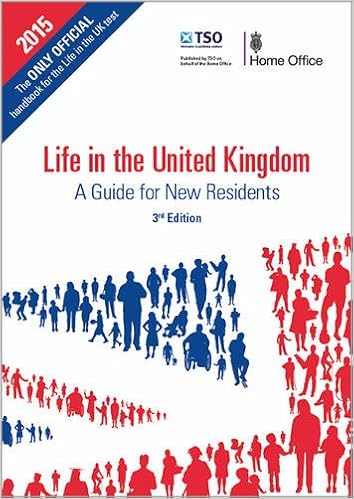
Image result for life in the ukI do feel a bit threatened and insecure when British and EU politicians talk about yearly fees for residents and of reinstating visa fees.  I worry that barring permanent residents from the US invites the same at other borders.  And dual citizenship should not be a litmus test for loyalty or patriotism.

Finally, its important to remember that virtually all immigrants are neither refugees or terrorists.  Like me, we seek opportunity and a better life, and are willing to work for it and to sacrifice for it.  I read a wonderful essay by Cecilia Hae-Jin Lee, Sizzler and the Search for the American Dream, that is more typical of most of us:

Our family immigrated to the United States in the late 1970s. We left behind our friends, our family, our language, our customs and everything we knew. We squeezed everything that was important to us into two giant, seventy-kilo bags per person, and still managed to have room to wedge in our hopes and dreams.

Labels: , ,

Wednesday, April 22, 2015

Outward migration

DSC00452 (849x1300)

‘Back in Dorset for the week: the cardiologist has departed to finish her dissertation prep and the Kids are moving to cook for a ‘gastropub nearby in Ashley Cross.  Their mother arrives for an extended visit on Friday, which should change the dynamic of the house in interesting ways.

Everyone took good care of my garden whilst I was away, and the or hid, violet, fuscia, fern, creeper, and chili are all thriving in the spring sunshine.

My miserable cold is also thriving; preventing meetings and phone calls for the week.  It’s so far immune to anything Boots can throw at it, so I’ve squirreled myself away to peck at DSC00444 (1039x1300)fundraising, end of quarter financials, and shareholder letters.

It’s a good chance to live a quiet life for the week, catching up on Coursera lectures (Algorithms and EU Law), Masterchef and House of Cards.  Back in the US, it’s tax time, and the WSJ Expat had a very good, very sobering article on the tax traps that can catch US citizens working overseas.  Once again, it’s worth hiring experienced help when you set up and when you operate transnationally in order to avoid expensive omissions. 

The UK government also started nosing around whether I needed to start participating in the National Insurance program now that I have my Indefinite Leave.  Most of my income redirects to the Netherlands (where I pay health insurance and pension tax premiums monthly there), so I didn’t meet the £8060 threshold for needing to sign up locally.

Lyman Stone posted a wonderful bit of research over on Medium, asking how many Americans are actually leaving the country to work or live abroad, and where they are going.  The US government doesn’t track these movements well, being much more focused on immigration, and the net outward migration is around 1%  of  the US population.

diaspora1

No surprisingly, most emigrate to Mexico, the UK, Europe and Canada.  In many countries with smaller populations, US-born residents end up being a significant minority within the population (a greater impact in Norway, for example).

He notes that migrants form cohesive communities of fellow nationals, and their home countries develop policies  to encourage philanthropy, money transfers, investment, travel, and political advocacy in developed-nation capitols...France, Spain, Italy, Ireland, and Portugal all actively engage with their diaspora populations, maintaining official counts and often trying to bring them “home.” 

This is not the case in the United States, unfortunately.  Its left to groups like the ACA and the ABC.  On the plus side, we don’t lose voting rights after prolonged expatriation like the British do.

Furthermore, given that the US-born diaspora is one of the most widely dispersed diaspora in the world, the United States will face growing pressures to maintain a global diplomatic and security presence.The United States is in a position of managing a diaspora spread through over 100 countries. Commonly enough, Americans view the rest of the world as the rest of the world’s problem. Unfortunately, in an increasingly globalized world, that attitude will lead to disastrously bad policy for Americans abroad.

Labels:

Monday, April 13, 2015

Tourists or travelers

DSC00270 (1300x867) - a

A traveler and a tourist can visit the same city, but experience it very differently.

A tourist’s goals are typically to see all the sights, learn their names, make and collect stunning pictures, DSC00318 (1300x794)eat the foods and observe the rituals of the city.

A traveler, on the other hand, seeks to understand the city, to know and live briefly among the people, to understand the languages, both verbal and nonverbal, and to participate in the rituals of the city.

At the end of equally long visits, the tourist is likely to have seen DSC00280 (1300x887)more monuments, but the traveler is more likely to know how to use the public transportation.

Damiran (1993) as quoted in Oddou, G. & Mendenhall, M (2008). “Global Leadership Development”

Labels:

Wednesday, February 25, 2015

The values debate

valuesOverseas visitors seeking to work, study or attend business meetings in the UK would have to demonstrate they respected “British values”, under proposals to make this commitment an integral part of any visa application.  -- FT.com

Oh dear…and just when the Life in the UK test was finally behind me.

Immigration is a difficult and contentious topic across Europe, as it is in the US.  The arguments for importing skilled talent and enhancing social diversity are well described by businesses and civic leaders.  But the reality seems different for native citizens, who must grapple with how to honor traditions and maintain fairness despite demographic change and economic austerity.  Migrant cultures seem to challenge rather than enrich established neighborhoods, to compete for jobs rather than create them.

wilders le pen feragePoliticians have responded by building barriers (reducing non-EU net inward migration) and enforcing assimilation (promoting a simple code that all can readily accept).  In 2014, the UK government suggested that, in addition to speaking English and mastering history and politics, a British values requirement would be adopted.  This would  assure that migrants respected ‘democracy, the rule of law, individual liberty, and mutual respect and tolerance of those with different faiths and beliefs’.  We’ve already been talking about how to test for it.

After all, these aren’t qualities that can be put into a multiple choice test, or captured through interviews or role playing.  It asks how applicants live their lives.

british-treatsIt may be that regular meetings with a caseworker or sponsorship by a neighbor may be required to establish a fit. 

Hopefully, there won’t be a skills test of preparing proper meals (battered fish), knowing the first thing to do on arrival in a new place (boil water for tea), or giving the correct greeting (‘You all right?’).

I’m smiling inwardly as I remember how long it took before those British elements became second nature.  And that alongside a whole different set of language, cultural and social rules that I needed to learn in the Netherlands.

The Netherlands is actually Welkom Nederlandsfurther down the road to assessing ‘values’ among immigrants.   My Dutch civics program tested to the ‘Red Book’, Welkom in Nederland. 

Now, “Integration from Abroad” requires demonstrating language and cultural skills before ever leaving one’s home country (domicile). 

And, since 2014, immigrants must sign a ‘participation statement’ acknowledging their understanding of Dutch values and their individual responsibility to contribute to society.

None of this need be a bad thing: it could be a sign that immigration is evolving from an exclusionary device to an inclusionary one.

Sarah Goodman notes that, increasingly, Civic Integration tests have two purposes.  They assure both mastery of content (articulated expectations for belonging, including social rules), and demonstration of commitment (language and civic orientation, general knowledge tests, naturalization ceremonies, and integration contracts).

Interestingly, then, conservative values testing satisfies a liberal purpose.  ‘Passing’ is not simply a reward for having achieved full integration; it is also a means to assist in reaching that goal.

As she notes,

Citizenship has previously been a simple instrument of migration control; passports are a device to regulate who enters and leaves physical territories.  In a sense, it is an international filing system, a mechanism for allocating persons to states.

But new changes in citizenship policy alter this definition.

New requirements balance out previous liberalization that has given more people access to citizenship without accompanying obligations of membership. Requirements also infuse new content into traditional national membership, emphasizing a universal not particularistic set of skills and values. Finally, civic integration requirements modify citizenship from an exclusionary device to an instrument of inclusion.

‘perhaps more progress than Teresa May intended.

Labels: ,

Wednesday, January 14, 2015

Securing permanent residency

WP_20150114_002 (732x1300)Beyond the Netherlands, I work in the UK under a Tier 1 work/residence permit, obtained in January 2010 when I decided to adopt a ‘2-foot’ solution to running two businesses in two countries.   While the attempt to bridge two lives was insane, since corrected, the permit gave me some practical flexibility over the Dutch Verblijfstitel.  It can convert to Indefinite Leave to Remain, or to a full UK passport (the Dutch don’t permit loyalty to more than one country).

The difficulty began a couple of years ago.  The new Conservative government pledged to make immigration harder to obtain, but cutting net inward migration fell onto the backs of non-EU citizens.  In my year, for example, the British granted less than 500 Tier 1 permits to Americans.

In 2012, when I went for renewal of my 3-year permit, I was warned that only one more extension could be granted.  This time around that option (and the Tier 1 permit altogether) was gone.

It was convert-it-or-leave time.

WP_20150114_011 (1300x732) WP_20150114_015 (1300x708)

I began to lay track over the summer, matching payslips to bank transfers, saving original bank statements, and passing my Life in the UK test.  Last week, I made an emergency run to the Netherlands to secure the last few stamped documents: the Accountant's Letter arrived on Monday afternoon.

Today was the day.

I had a several-inch stack of original documents showing that I met the points-based criteria necessary to stay in the UK forever.

Or, failing, to be literally escorted out of the country, forever.

WP_20150114_010 (1300x704)It didn’t start out well: I had trouble finding Lunar House in Croyden where the Home Office maintains the Visa Services.  The security folks turned me around and out of the building twice, asking that I wait outside in low-single-digit cold until my entry time arrived.  I passed the shivering time posting pictures on Instagram.

WP_20150114_006 (1300x732)My escort met me at 11, and we were off into the process.  Security, wait, Registration, wait, Biometrics, wait.  My fingers don’t quite uncurl over the scanner glass.

Better than Jury Duty ambience, the waiting room has improved substantially over the bus-station chic of two years ago.  A snack bar and tables have been installed and the rows of chairs upgraded.  ‘still no WiFi, but they are more lenient about phones.  Monitors glowed along every wall to indicate progress through the system: I could follow my packet 174 from Verification through Awaiting Consideration to Under Consideration as the hours passed. 

I’d brought work but was too nervous to complete it, opting for a sipped milky tea and nibbled chicken sandwich.

WP_20150114_009 (1300x687)My numbers flashed up, report to Counter 42.  Questions: never a good thing.  But the clerk only needed to know what original documents I wanted back, and which they could keep.  We sorted the pile across the counters.  More waiting

Finally my indicator moved to Collect Documents and my escort came back to congratulate me.   I really didn’t accept it, though, until the confirming letter from the Home Office was in my hand.

WP_20150114_014 (1300x732)But I’m there: Officially British.  The status converts to a full Dual Passport next year, and I never, ever, have to go through the process again. 

The passport gives me the right to live anywhere in Europe, subject to Britain staying in the EU.

It gives me the right to keep working on my business.

It gives me a path forward.

Labels:

Thursday, January 8, 2015

Rushing about, pointlessly

InstagramCapture_190509b7-e14b-45c3-a417-0abe1ffde672Next week, I submit documents in support of my ILR application in the UK.  After 5 years as a Tier 1 resident, the permit is no longer renewable, and so must either be converted to Indefinite Leave to Remain, or I need to leave the country.  I’ve retained Dean Morgan and his trusted crew to see me through the process, yet again, and we met on Tuesday to review my documents.

Unfortunately, the UK’s tightened regulations require additional original, stamped documents from the Dutch; bank statements from ABN, business registration from the KvK, and an accountants letter from Finsens. 

Worse, I would not be allowed to leave England after Saturday, the 10th, when my permit expires.

So, there was no cure but to fly to Amsterdam urgently and spend the day running spot-to-spot collecting the pieces needed.

WP_20150108_013

As a diversion, I live-blogged the rainy, cold scavenger hunt as it progressed.  Unfortunately, Facebook has become a swamp of petty cruelties, so this was a good opportunity to explore the happier alternative climate of Instagram.

InstagramCapture_2e822fbc-7eef-490b-b4fb-fd9805006806InstagramCapture_5a731ac4-27a8-452c-ac6d-45a4bfcc6dfdInstagramCapture_9e581f73-3483-4ab8-90e6-d099b6e20ab3WP_20150108_010InstagramCapture_ecd8d79c-a3eb-412d-b93f-ba1a97099b43InstagramCapture_45ab1a3b-e91d-429a-a696-ce5e3c468c5bInstagramCapture_605ae851-6e20-4480-9a9f-c0488df0d685WP_20150108_014

In the end, I got almost everything I needed: one last document will be couriered over the weekend.  

And there were some nice responses from Insta-friends along the way.  So, the narrative experiments will continue: you can join me @drhamptn.

Labels:

Thursday, July 31, 2014

Life in the UK (reprise)

Pass snipI passed my Life in the UK test!

This has not been an easy adventure.  The book is dense with information, and the practice tests indicate that the questions require memorizing tiny scraps of information buried in individual sentences.

(Try it for yourself here or here: it takes a score of 75 to pass, I generally got 92 or better)

I created a spreadsheet of key dates, memorized population every 50 years from 1600 onwards, drilled on lists of poets, sports figures, and scientists.  I know the dynasties, the wars, the battlefields, the Union and Reform Acts.

Each evening, I went down to the pub, drew a single pint, sat on the terrace, and drilled with the w.wezen by phone.  Distinctions blurred: Who used Proportional selection vs First-past-the-post (AM vs MP); What happened in 1215 vs. 1314 (Magna Carta and Bannockburn)). 

I started to waver, confidence ebbing…

DSC07878 (1300x973)This morning, I was on the road at 6 am to the testing enntre at Eastleigh, stopping only to sketch a diagram of English History from memory, then drill on Authors works and Olympic athletes.  Head filled, I joined a half dozen others tight-lipped aspirants in the county building.

Everyone on staff was very friendly and encouraging, especially to those repeating for a second or third time.  IDs were checked, residence verified, and we had a quick scan for any electronic devices.  We were each assigned to a computer and given a quick practice test.  Then, off we went: 45 minutes to answer 24 multiple choice questions.

I was done in 5 minutes, yet was the 4th to finish.

The test was easier than expected: heavier on judicial questions, lighter on history than expected.  I only hesitated on a question about individual registration for electoral roles (only required in Ireland) and whether DSC07863 (929x1300)police complaints must be made to the Chief Constable in writing (credible, but unlikely).

Otherwise, my study had prepared me for knowing the distinction between Great Britain and the United Kingdom (Ireland), England’s official flower (rose), and the attackers of 1588 (the Spanish armada). 

Even the time and place seemed easier than they could be (The Bill of Rights of 1689 transferred power from the king to the parliament or from the parliament to the king?)

Another wait and I reached my exit interview: the computer said that I passed (without telling me my score: the clerk was apologetic about not being able to say which , if any, questions I’d missed). There was a printed, stamped, signed certificate and a handshake, a big smile.  On the way out, I donated my book to others who might need it: it seemed a fitting conclusion to pass along a bit of (heavily annotated) luck.

In the end, it as ass much a test of desire and belief as of facts and customs.  Would I put in the work to learn the material; would I accept this version of history and culture?  (The US, for example, doesn’t figure at all in British versions of WWI or WWII.)

The qualification gives me the right to seek Indefinite Leave to Remain (ILR) or Dual Citizenship, ‘next stop is my immigration advisor and to see if we can get this done.

But if really feels good to have this one over.

Labels: ,

Friday, July 25, 2014

Life in the UK

DSC07754 (962x1300)Sunny, humid highs have graced the Jurassic Coast this week, punctuated by anemic thunderstorms.   I’ve been loyal to the Lilac Room, calls and emails to keep our legal agreements, production facilities, fundraising and clinical trials rolling.  Midmorning coffee with friends, late afternoon walks along Sandbanks, keep it all (somewhat) balanced.

It’s ‘Life in the UK, my secondary project.

My Residence Permit expires in January, and I need to get serious about the Indefinite Leave or the Dual Passport options.  I’ve no interest in giving up my US Citizenship, which would be required by the Dutch, yet still want to be able to remain in Europe and have some flexibility in where I finally settle down.  DSC07756 (1300x955)Anti-immigration sentiments are making it increasingly difficult to remain as a long-term expat, even when creating businesses and jobs, bringing unique skill and experiences, and that ‘special relationship’ between our nations.

Lisa Pollack wrote about the difficulties in a column in the FT last week.  I hadn’t realized it, but only 417 Americans qualified for a Tier 1 Visa the year that I got mine.  Since then, the qualifications and quotas have tightened considerably, and extensions will no longer be granted after next April.  Her experiences are exactly parallel to mine (we even both went through renewals at the Croyden offices); we only differ in that I have relied on skilled help to navigate the unforgiving assembly and prosecution of an application.

So I called my advisors and said that it was time to get the ball rolling.  “Save your bank statements, pass your test, and call me in September,” he counseled before leaving on an enviable holiday.  I picked up my copy of Life in the UK and started studying.

lifeintheuktest1For the most part, the social and political section seem straightforward.  Although things are differently named, there is sufficient overlap between US and UK systems of governance that it all seems familiar in principle.  The differences are mainly in vocabulary, always a problem, and exceptions for Wales, Northern Ireland, and Scotland.  The main issue has been in memorizing 2000 years of detailed history, heavy on names and dates.  The timelines and details in Project Britain have been invaluable in summarizing the information.

My test, then, is scheduled for the 31st: I’ve paid my fee and I spend an hour each day on the exercise bike, studying, before  heading to Penn Central for a beer and a test.  I’ve never enjoyed oral testing, and this is a daily Quiz Night, but my practice scores have risen from the 40s to the 90s, far above the Penn Central75 needed.

The only negative is that I’ve become a fixture on the terrace, slurping a Doombar as I mumble answers into my earpiece.  Several people greet me as I enter now, asking how its going, one woman tried to buy me a beer last night. 

Distracted and out of practice, I failed the pick-up test miserably.  I managed to be both surprised and confused by her interest, alongside the w.wezen’s laughing critiques and queries through the earbud.

Fortunately, that wasn’t the real test.

So, as with so many things in my life:  ‘still practicing….

Labels: ,

Friday, July 12, 2013

On expatriate identity

Each time I fly into England , I have to fill out a Landing Card.  Name, address, passport, family, occupation: my identity.  I usually put “Scientist”, not strictly true, I suppose, but it does describe how I think of myself and who I want to be known as.

I also define myself as I’m seen by others, a job title, personal relationship, or hometown,   But, more deeply, I have  a personal identity, persistent qualities that describe and define me, that set me apart from other  people as unique and exceptional.

“I am an expatriate” is one of those qualities.  I am someone who has chosen to leave home to live in another culture, to experience life and form lasting relationships away.  It’s different than living an identity in my home community: I’m creating one in someone else’s.  It’s not ‘fitting in’;  it’s purposeful.  I am discovering who I am and building who I want to become. 

The heart of the paradox is that I also have to be tolerant and adaptable.  The Big 5 Traits of Expat Success stress the importance of extroversion, agreeableness, openness, conscientiousness, and emotional stability.  Very few long-term expats write about it, and little research has been done.   But balancing conviction and change to preserve who I am is the most difficult and stressful part of the expatriate experience. 

The long-term expats who I know, by definition successful ones, are curious, confident, optimistic, and committed to making a complete life within their adopted culture.  But, to an even greater degree, I would characterize them by their rootlessness: the absence of strong ties to people, places, community, or jobs in both their adopted and their home countries. 

And that leads to key questions about personal identity.

  • Can expats define themselves by the absence of things?
  • Can expats maintain themselves with a shipping container of personal effects and long-distance relationships over Skype?

I’ve taken on this challenge of building a new facsimile from the objects, tasks, routines, events, language, and  history around me.  I’ve sought out and committed to connections with local people.  I became whole in my adopted home, with an image and a narrative that describes a vision and a future.

But it’s situational, fragile, too easily lost when an apartment ends or a connection fails.

‘just that simply.

The paradox, and the existential stress, is that expatriates are the most likely to need a strong personal identity yet least likely to have the means to sustain one.  And that rootless search may be the signature characteristic, and the defining problem, of expatriate life.

Labels: ,

Wednesday, January 9, 2013

Renewing my Tier 1 visa

UKBAIt was dark and raining when I lined up outside the UK Border Agency office in Croydon this morning.  Asylum left; Visa’s right, the officer directed.  At 7:30 precisely, wholly uncharacteristic of a government agency, we shuffled through the front door.

This was the end of a three-month prep for renewing my Tier I UK residence / work permit.  I’ve been on it for three years; it was required to operate my UK startup and to accept funds, and had worked smoothly throughout even though I base in the Netherlands.

But the renewal is much more difficult than the annual Dutch ‘Send a photo,  check, and a bank statement’ process. 

In the UK, points-based scoring requires re-validation: Five categories of evidence and original documentation in support of each one.  I needed my original diploma, signed and stamped bank statements, and three trips to Amsterdam to secure statements from my accountants.   The pre-audit ruled out the Dutch as being legitimate sources of financial data, so the job was re-done by UK auditors. 

Costs and frustration mounted.

This morning, I had my pile of documents and a handler alongside to see if I could complete the process.  The appointment and application were checked; we went through security and they confiscated a corkscrew from my suitcase.  We went through an application check, a background check, and they took fingerprint and facial biometrics.  I paid the fee for a 2-year renewal: 1800 gbp (on the card, at least I get airline miles).  The packet went in to an examiner and I settled in to wait.

The process took four hours.  There were three call-backs to provide additional evidence (which I fortunately had) and one bump for a supervisor check (customary for self-employed applicants).  At one point, my handler was handed a red piece of paper and he grabbed his cell phone and ran out of the room.  I thought it had sunk, but they wanted the professional registration number of the UK  auditor.

Finally, I was given a letter that my application had been approved and was advised 1) not to leave the country for the next week until my biometrics card arrived, 2) that I have no recourse to public funds, and 3) that I could not train to be a doctor nor seek employment as a professional sportsperson.

At tis level, both applicants and auditors are trying to do the right thing, and both are ill-served by the system (and I think that the US has equal difficulties).  OccupationsProfessionals seeking a work permit have skills and ambitions to create businesses and products that grow jobs and exports.  Reviewers are conscientious in assuring that applicants will be able to integrate and perform.  But the process is so expensive and intimidating, very difficult to get right from either side.

Does it, in the end, serve the positive goals of society to make the process so challenging for those who want to come and contribute?

Labels: ,

Monday, December 3, 2012

Visa quest (ctd, ctd, ctd…)

UK T1I work in the UK under a Tier 1 General visa, granted in January, 2010.  It’s a points-based, 3-year program that lead to full immigration into Britain or granting of Indefinite Leave to Remain.  The rules for getting a visa have tightened up considerably since I got mine, as the Conservative government tries to restrict the flow of workers into the country, while promoting integration and lessening dependence among those who do come.

The Tier 1 allows two one-year renewals, and my advisors told me that it was similar to the Dutch system: stay on good behavior, keep working, maintain a minimum bank balance, pay your taxes.  When the time comes, fill out the forms, go to the Border Agency offices, and pay your fee (1800 gbp for the renewal).  No worries.

But, as I’ve learned through long experience when it comes to these matters, Do Worry.

As presented to me, renewal is looking more and more like applying for the first application, with strict rules on points-based proof, original documentation, and prolonged loss of passport during processing.  I’m now remembering, three years ago, that I made application through the Chicago embassy to get 24-hour turnaround.

I need 95 point to get the visa renewed, based on these qualities:

Points

It’s a funny system.  In a land where youth unemployment is a big issue, extra points are given for expats in their 20s, no points over 34.  Qualifications are degree-based; English Competency may require an exam (shuddering flashback to the Dutch tests I recently took).  The others are economic, if you make over 30K gbp/year, then you’re good.

It seems like it addresses the questions of whether people can integrate and take care of their own needs.  An obvious hole is the level of assets being built and debt being carried,  how has life progressed over the three years.

But, worse, the economic side is blank.  I have started a business, hired local workers, imported cash, exported product, mentored and taught others doing the same.  Zero points, but that is exactly what they want to have people doing to build economic growth, preferable to austerity.

Whatever, the country belongs to the government and they re entitled to set their own rules  I can get to 75 pretty easily, but the remainder requires me to prove that I make over 30,000 gbp per year.  It shouldn’t be difficult: Payroll records and bank statements, an annual report from my company. 

But there are two complications.

First: Dutch-based company.   I work as a UK-based expat for Stone Bridge Biomedical BV.  With operations in three countries, Stone Bridge pays my salary and expenses from several locations.  Consolidating them to show one payroll check, one corresponding bank statement that exactly matches the payroll check, is impossible.

Cash Flows

Second: Taxes.  I work for my Dutch company, so I pay Dutch business, payroll, and personal taxes.  I report the business and personal income to the UK and the US, who all interpret it in different ways.  All recognize and credit the Dutch taxes paid.  But the British may raise IR-35 questions (Are you truly a Dutch expat or actually a UK worker) and questions about the local bank account (Is it a business account or a personal account).

It all gets very, very complicated, expensive, and time consuming.  My case worker is already rolling his eyes and asking for more money to cover the work of prosecuting my application. 

I understand the need for secure borders, limited inflows of people, and domestic employment growth.  But it is becoming, everywhere, progressively harder to follow a process that simply allows me to keep living locally and building my startups.

Labels: ,